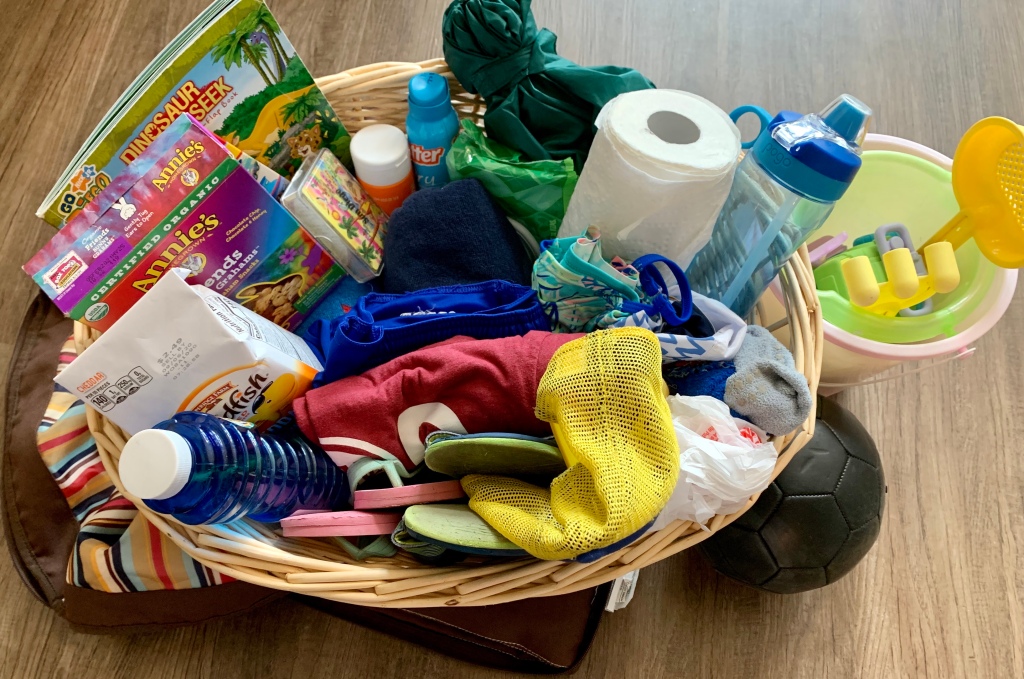
A violent storm in the middle of tennis practice that we walked to…
A vomiting episode while on the way to a birthday party…
A car seat covered in urine…
A random invitation to a friend’s pool while out running errands (with no swimsuits on hand)…
An extended play date at a shade-less playground in 95 degree heat…
A swarm of mosquitos on a hiking trail…
After years of summer surprises hitting me like a ton of bricks, I finally smarted up and decided that my car needs to be well-stocked for summer! I always keep a duffel bag in the back of my mommy-van full of these essentials for the entirety of summer, which in Texas lasts from March through October.
This kit has saved me more times than I can count and allowed us to have uninterrupted summer fun. We’ve been able to linger longer at an activity or park. I’ve been able to say ‘yes’ to random splash pad stops. We’ve added on state park visits to an otherwise boring morning. I’ve been able to clean up disgusting messes while on the go, tame countless snack cravings without resorting to fast food, and wait out unexpected downpours.
This little bit of preparation has helped us truly enjoy summer’s spontaneous moments.
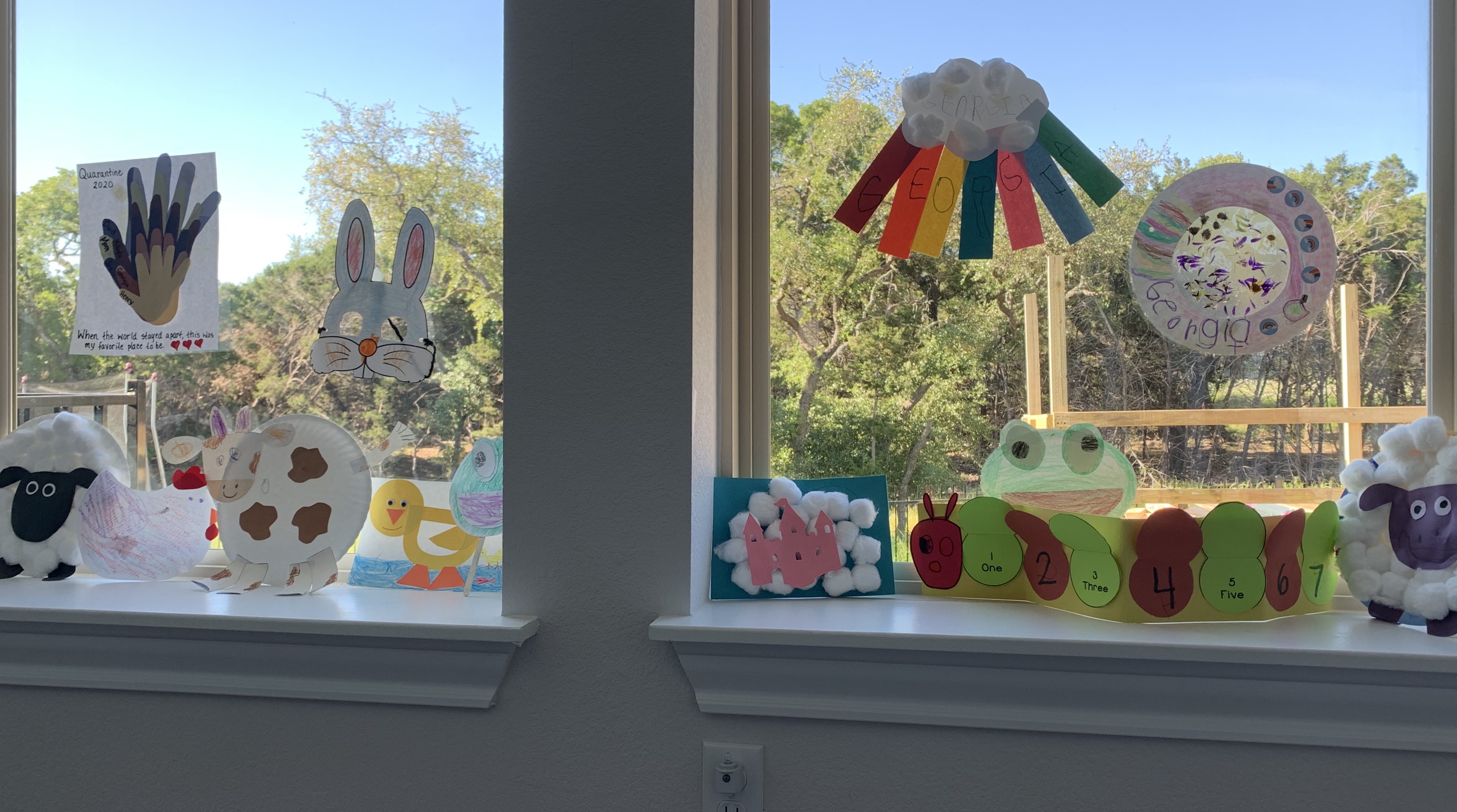
This morning, my floor was covered in multi-colored pom poms, cotton balls, pipe cleaners, crayons, glue sticks, googly eyes, straws, and empty plastic baggies. The kids and I have a blast making frog masks, hungry caterpillars, watercolored paper chickens, and sunny scenes with stickers…. but, what am I supposed to do with all of these beloved projects when they’re done? My children are very aware of every single art project they’ve created and where it last hung or which window it was sitting in.
That means there are no opportunities to discretely sneak them into the recycling bin. This issue has led me to start thinking up and researching simple crafts that serve a purpose beyond a fun few minutes with the kids and walls full of half-colored creations.
As we enter into our last month of homeschooling for this year, I am feeling a sense of re-motivation and decided to brain-dump my list of purposeful, easy crafts for kids right here.
1. Simple Homemade Bird Feeder
Pull out those dusty popsicle sticks, a few markers, some twine, and glue. Have kids color the sticks as they choose and then assemble a base by placing two sticks a few inches apart and then building a floor on top of that. From there, create sides by gluing each layer in an alternating pattern. Tie the twine on to all four corners, leaving enough length to tie the top around a tree branch. Then, fill with bird seed and watch the sparrows flock your tree. Don’t keep birdseed around? Your local grocery store likely carries it for pretty cheap. We bought some to make ornaments last Christmas and paid less than $2 for a 4 lb bag at HEB.
2. DIY Costumes
Making costumes for small children to play dress up doesn’t have to be as daunting as it sounds. With your children’s help, you can quickly and easily create simple costumes, such as pirate, superhero, Peter Pan, cowboy, Cookie Monster, and book characters to keep them entertained for hours at home. There are countless no-sew links online or you can pull up a picture of your child’s favorite character, look around the house for a t-shirt color that matches, some construction paper, and other random objects to pull together a costume that reasonably resembles the real deal. For example, if you have a Captain America fan in your house, take a white t-shirt, color it with a marker to look like the character’s shirt, then use red duct tape or markers for accents. You can make a shield by coloring the backside of a paper plate, cutting holes in the sides, and attaching string. Then, check links online for no-sew superhero masks that can be made with construction paper or felt.
3. Cereal Box Mini-Storage
I love this frugal way to repurpose what would normally become trash into little storage containers for craft bits and pieces, pens, office supplies, snacks, and any other small items that need to find their own place in your home. To create these mini-storage containers, cut an emptied cereal box all the way around approximately 2 inches from the bottom. Then, strengthen and decorate the cardboard with duct tape you have lying around. Kids can decorate the tape using markers or label it with what will be stored inside. Voila… you crafted something useful that can fit in your junk drawer and keep you organized.
4. Painted Jars for Organizing Colored Pencils or Small Toys
Do you have dozens of acrylic paint bottles set aside for no specific use? How about a few jars tucked away in your cabinets? If so, you and your kids can paint the jars and then set them up on desks or bookshelves as a way to sort and organize colored pencils, pens, toys, erasers, legos, etc.
5. S’more Love for Neighbors and Friends
Looking for a way to spread love during these unique times? This campfire art project allows your kids to make something beautiful and gives you all an opportunity to share s’more love with others. Materials needed: small twigs from the yard, red and yellow paint, thick paper or cardboard, cotton balls, and a small amount of clay or play-doh (colored paper, cardboard, or just about any craft material can be substituted here). To make your campfire, glue the twigs at the bottom of the paper to look like fire starters. Then pour the red and yellow paint onto paper plates. (Mix some red and yellow to make orange as well.) Let kids paint or dip their palms into the paint and make handprints to resemble flames above the twigs on the paper. Make as many or as few prints as you want until you have your desired campfire image. Then, create a s’more above the fire with a rectangular strip or brown paper or cardboard to represent the graham cracker, a bit of brown or black clay to represent chocolate, and a few cotton balls to make your marshmallows. Write a sweet note at the top of the paper, and deliver the beautiful creation along with a baggie of s’mores ingredients to a friend’s front porch.
6. Easy Art Wall
There are many ways to make an art wall in your home for all of those beautiful creations mentioned in the first paragraph. The easiest way I know how to do this is simply to hang a wire and use clothes pins to hold up those treasured pieces and continually replace the old with the new. To include the kids in this activity, have them decorate the clothespins. They can make tiny faces and glue on felt or paper clothing. They can make butterflies and dragonflies. They can glue on poms to make cute, colorful insects. The options are endless, and your art wall will be even cuter than you imagined.
7. Birthday-in-a-Box
Bless someone on their quarantined birthday by filling a box full of special decorations and surprises. Think of a theme, create games or activities (pull pages from a themed coloring book, pass down a puzzle, or just include sidewalk chalk and some instructions for a driveway obstacle course), scavenge the house for party supplies or decorations, draw faces on inflated balloons, and make a card. This box will be chock full of love and fun, plus your kids will have a blast doing a crafty and kind act for another person.
8. Homemade Clean-Up Labels
Has your kid ever used the excuse of not knowing where something goes to escape a clean-up chore? This easy craft serves the purpose of giving your child an opportunity to be creative and keep their little hands busy, while also making labels for shelves, bins, and drawers for easy clean up. Print blank pictures of toys or toy categories, such as legos, dolls, trains and cars, costumes, doll clothes, play-doh, or any other favorite toy in your home. Then, let children paint, color, or recreate the printed picture using their own supplies and creative ideas. Glue or tape the new labels in their appropriate location and encourage kids to “sort” their toys to match the labels.
9. Recycled Materials Art
Search the house (or better yet, the garage) for unused, unique items that can be repurposed to make beautiful art. Buttons can be eyes, twine can be a smile, a nail can be a nose, and yarn can be hair. Find an old frame for the artwork, and you have a personal and meaningful piece of art for your wall.
10. Disposable Table Cloth
Cover your table with easel, butcher, or the back side of holiday wrapping paper. Tape it down and let the kids decorate it. This is such an easy and fun way to keep kids busy for a long time! Plus, you can use your disposable table cloth to teach kids how to set the table by drawing plates, silverware, and napkins at one setting or you can practice math skills by measuring the table and using division to separate the table into equal art “squares” for each family member (and then calculate area and perimeter) or kids can simply use the tablecloth as their scratch/note paper while completing their online schoolwork.
11. Painted Rocks as Reward Tokens
Most kids love to paint rocks, but you can use these painted rocks as more than just sidewalk or trail decorations. Think of behaviors you want your children to work on. Then, collect rocks and separate them into piles for each behavior. Maybe you have an “inside voice” pile, a “close the back door without reminders” pile, and a “flush the toilet” pile. For each desired behavior, assign a color. Have your child paint all the rocks in that pile with one specific color. (They can add designs too.) When the rocks have dried, bring them in the house and set them next to bowls or jars labeled with the desired behavior. Each time your child achieves that goal, have him or her place a colored rock in the jar or bowl. When it’s filled, give a reward.
Happy Crafting! Please share your creations below or on Instagram with the tag @dripping_with_kids or #drippingwithkids. I’d love to see your crafts with a purpose!!
When my kids open the pantry door to find it looking like this, let the whining commence: “There’s NOTHING to eat!” If they don’t see their favorite pre-packaged lunch and snack items, they are at a complete loss as to how to feed themselves. But I see several days of meals and snacks in this pantry…
– Noodles (with butter and Parmesan) for my picky eaters or meatless spaghetti for others
– Mac n cheese, Ramen, and Spaghettios for quick lunches (in a thermos for school)
– Canned veggies and baked beans for sides
– Flour and sugar for muffins (paired with nuts and/or the frozen bananas I’ve been saving)
– Biscuit mix + Nutella for another breakfast option
While my kids might see our pantry as half-empty, I see it as a pantry half-full. The above list of options may not be enough to stretch for an entire week if you’re feeding a large family, but if you’re looking for ways to save on groceries, you could add a few reasonably-priced perishable essentials, such as fresh fruit and veggies, milk, bread, cheese, lean meats, and butter. With those additions, I bet your “bare” pantry could feed your family for over a week.
Full disclosure – I did take a trip to the grocery store this afternoon because my fridge was looking a little sad and because I have a 4-year-old obsessed with milk, as well as a 9-year-old who binges on fruit. However, I don’t plan to venture back to H-E-B for at least 2 weeks, and our monthly (food only) grocery bill remains under $550 for our family of 6. For more ideas on how to save on groceries, check out my post, 7 EASY Ways to Save on Groceries.
* For this week’s Sunday Surprise, I used ingredients I always have on hand to make Flourless Peanut Butter Oatmeal Chocolate Chip Cookies (recipe linked above in list). These are usually a special treat for my husband and me, and the kids have to be quick to snag one for themselves!
There are obvious answers to this question that speak to just about every individual in this country. Financial freedom means more … more time with family, more travel, more outings with friends, more buying power, and more control over your schedule. Financial freedom also means less… less anxiety about money, less time at work, less overall stress, and less responsibility. To some, it represents a debt-free life. To some, it means living minimally or nomadically. To some, it’s about achieving a better life than their parents had. To everyone, it opens the door to greater opportunities.
While these are all excellent answers, I had to interpret the meaning of financial freedom for myself as I embarked on this savings journey, recognizing that I was “dragging” five other people along on this road to financial independence. With that level of responsibility in mind, my definition had to be worthwhile and incredibly motivating.
Financial freedom allows the ability to let go…
of maintaining a specific image; of an addiction to other people’s lives; of the shackles of material goods; of the restrictions placed on me by others; of saying ‘yes’ when I want to say ‘no’; of saying ‘no’ when I want to say ‘yes’; of negative relationships; of working to achieve someone else’s dream.
It provides the option to linger…
in bed all morning with my husband; on the floor in my kids’ playroom as they set up a tea party; at church after service or maybe on a Wednesday; on a restaurant patio with a friend; on a beautiful beach all day; in my sister’s living room catching up on a favorite TV show; at my mom’s house sipping coffee; at my children’s favorite museum; on the hiking trail or in the river at a state park; with a baby in my arms.
It affords the privilege of indecisiveness…
on whether to build a forever home or buy an investment property… or both; on whether to volunteer in local church ministries or start the business I’ve always dreamed of… or both; on whether to homeschool my kids and travel the globe or keep them in public school… or both; on taking up golf or playing in an over-40 soccer league… or both; to write a book or start or podcast… or both.
It commands the responsibility to give…
financial literacy lessons to my children; personal finance advice to the young and old; donations to charitable organizations; more time to important projects; opportunities to the underprivileged so that they can break the cycle of poverty; more of me to those I love.
Personal finance is exactly that: personal. Financial freedom can mean the same thing yet something different to everyone. What does it mean to you?
I love a challenge! I often assign myself nearly impossible challenges to stay motivated in my savings journey, and the budget I set for a trip to Boston was no exception. I challenged my husband and myself to take in as much of the city as possible on a budget of only $500, which required finding several free things to do in Boston. Read on to see how we managed in this challenge and to find out how you can see Boston on a budget too.
Boston is wicked cool; it offers the best of almost every type of vacation. If you prefer to learn about history, Boston has you covered. If you’re a foodie and want to taste unique cuisines, Boston will satisfy your palette. If you want nightlife and the excitement of a big city, that can be found in Boston too. With so much to do and see, it’s actually quite difficult to do it all in 3 days, and it’s even more difficult to stay on a budget.
Transportation:
Airfare – Thankfully, we had reward miles, so airfare wasn’t a factor in our budget. However, even if it was, I love using the Google Airfare search tool to find great fares. All you have to do is type in “flight from _______________ to Boston” in the Google search bar, and you will be provided a calendar of fare prices for multiple airlines. We used rewards, but it would have only cost us $116 each to fly round-trip from Austin to Boston. Sidenote: Airfare to Boston is a tad bit higher (not outrageous) between April and November, as these are reportedly the best months to travel to New England; in doing a quick google flight search, I just found American Airlines flights in the peak of summer from Austin to Boston for $157 round trip.
*Additional Savings Tip: If you want 3 full days for your trip, book an outbound flight first thing in the morning and a return flight late in the evening. The airfare is usually cheaper at these times, and you get 3 full days while only paying for 2 nights of hotel.
Getting Around the City – Downtown Boston is very walkable, and most tourist attractions, restaurants, parks, and hotels are close to each other. Book a hotel close to Faneuil Hall, and you can walk to most places on your list. The subway and the trolley are also available for distances a little further away or for tired legs. To travel from the airport to your hotel, both Lyft and Uber are available, so you can go on the apps and find the best deal. It cost us less than $18 each way.
Hotel:
As mentioned, there are several hotels in the downtown Boston area that are close to most attractions. Because of all this competition, you can find a deal! Here’s my hotel booking trick… after booking airfare, I check sites like hotels.com and kayak to find a good value. I always use the map function to make sure I understand where a hotel is located before clicking to find out more info. I look for a hotel that is at least 3 stars, has a very high review rating, and is in a safe and convenient location. I also search for additional amenities that will save us money, such as free breakfast, free wifi, and/or free airport shuttle. When I find a great option at a decent price, I book… but only at the free-cancellation rate. Then, I set an alert/reminder in my phone to go back and check hotels again just before the final cancellation date. I usually re-do my hotel search about 3-4 days before we depart.
For this trip to Boston, I ended up cancelling the original hotel I had booked, which was priced at $319 for the trip, and booking one right in the heart of downtown. The location couldn’t be beat, and the last-minute price for 2 nights was $187.16! (I’ve decided not to disclose the name of this hotel because it is undergoing renovations and has a few kinks to work out, but feel free to message me for more details.) There were several additional hotels nearby that would have been less than $200 for the 2-night stay. There are also motel, small apartment, and hostel options in the downtown area that are very affordable. (Sidenote: Traveling during summer will probably double these prices.)
Once these basics are sorted out, then comes the fun stuff! What will you do and eat while there? Based on the money my husband and I had already committed to hotel and transportation, we had $276.84 leftover in the $500 budget for food and entertainment. The options in the Boston area are endless, and we stumbled across many free or low cost ones!
Food:
Clam chowder, lobster rolls, wood-fired pizza, Italian meatballs, fresh sushi, colorful gelato, oysters on the half-shell … the delicious offerings on every single block of Boston are incredibly tempting. The food is pricey even if it’s not your top priority, but here are a few ways we tasted the local fare yet kept some costs down.
Peruse the markets – Boston has several indoor markets with enough food options to satisfy every unique taste bud for an entire week. We strolled through Quincy Market and Boston Public Market, both in the financial district/waterfront area of town. These markets offered everything imaginable, from seafood to protein bowls to soup and chowders to sweet treats to Chinese food to made-to-order pasta and so on. We ate at the markets a couple times and spent around $10 each for a meal. Another friend highly recommends Eataly, on the west side of downtown, which seems to be the perfect stop for a foodie with its huge selection of foreign cheeses and specialty wines.
Apps and Drinks with a Side of Tourism – We decided to combine sightseeing with dining. The bar that the favorite 90’s TV show, Cheers, was modeled after is located in the beautiful, historic Beacon Hill neighborhood and right across from the Frog Pond and Duck Crossing at the Boston Common Park. On the walk to the pub/restaurant, you’ll take in unique architecture, people watching, park beauty, and historic sites. Then, once you descend the stairs from the street to the iconic bar, just like in the TV show, you’ll hear the theme song and realize you’re entering the bar “where everybody knows your name”. To save a little money on your tab, present this coupon to your server or bartender.
Another must-see pub is the Bell in Hand Tavern; it claims to be the oldest tavern in the country. While sipping on a beer, wander both sides of the tavern and check out the paintings and other artifacts on the wall. Also, the bartenders are happy to answer questions about the history of the bar. They have yummy craft beers on tap, a full restaurant menu, and live music most evenings.
One more option for dining and sightseeing while also saving money is lunch at the Chipotle in the location of the Old Corner Bookstore on the Freedom Trail.
Ravioli e Tiramisu Por favore – What’s a visit to Boston without a trip to Little Italy? Officially called the North End, it is the oldest neighborhood in the city, and it’s right on the waterfront. With over 80 restaurant options, you can walk and check out menus in the windows to compare prices and choose something within your budget. (Find a list of food and attractions in advance at https://boston.cbslocal.com/guide/a-guide-to-bostons-little-italy-the-north-end/)
Keep snacks on hand – We stopped at a grocery store to stock up on a few munchies to have for late night and mid-morning to save us from eating out more often than our main meals. We also skipped the temptation to buy a coffee or snacks while at the airport and just waited until we got on the plane.
Total amount of money we spent on food, coffee, and delicious craft beers was $215.25. Subtracting this from the $276.84 we had remaining, we were left with only $61.59 for entertainment and activities. We had to kick our resourcefulness into full gear and managed to spend absolutely nothing on visiting historic sites and touring the city.
FREE Things to Do:
Here is a list of my top FREE things to do in Boston (based on our visit).
Freedom Trail – This is a 3-mile walk through the city with 16 historic sites to visit. Some of these sites have admission fees. Here are a few you can enter for free:
USS Constitution Ship and Visitor Center: You can board the ship for free with a sailor as a guide, which is pretty darn cool, and you can also peruse the visitor center for free. If you venture over to the official USS Constitution Museum, you’ll need to pay (technically a donation) to enter.
Old North Church: This church is a must-see! Its steeple is the location of the hanging lanterns that prompted Paul Revere’s famous ride, and there is much more history to take in. There is a fee for admission, BUT if you attend service on Sunday morning, which I definitely recommend, you can enter for free, worship in an historic sanctuary, and will be invited to stick around and explore the chapel.
Faneuil Hall – Multi-story museum, gift shop, and national park visitor info center
Boston Common Park – America’s oldest city park with walking trails, dozens of historical plaques and memorials, a visitor center, Frog pond (with ice skating in winter), and a very rich history. Follow up this visit with a drink at Cheers right across the street.
Massachussets State House – Schedule a free tour on a weekday.
There are several other sites along the trail that are worth passing by or walking through. A few have admission charges, and some may totally be worth the fee based on your interests. Next time we go, we decided that we’ll visit the Paul Revere House, which has a $5 admission fee.
Book Shops and Libraries – If you love rare finds, first editions, and that quintessential old bookstore vibe, check out Commonwealth Books. Another unique and historic bookstore is Brattle Book Shop, known for its large selection and great prices. If a cool library appeals to you more, check out Boston Public Library’s Central Library in Copley Square. In addition to thousands of books and an interesting history, this library offers free art and architecture tours, an adorable children’s library, Saturday afternoon concerts, and three cozy cafes.
Holocaust Memorial – Don’t miss out on your opportunity to walk through this incredibly emotional and moving memorial. It includes quotes and historic accounts shared by survivors of the Holocaust.
Abigail’s Tea Room at the Boston Tea Party Museum – Do you want to visit the site and learn the story of the Boston Tea Party without paying the museum admission price? Here’s a little secret… you can enter the gift shop and check out the interesting selection of souvenirs and collectibles, then cross a bridge right over the Tea Party ships to Abigail’s Tea Room in the back. There are costumed employees willing to answer any question you have, plus 17th and 18th century table games you can play as you sit in the cafe on the water. For a mere $3.50, you can purchase a mug and sip on unlimited amounts of tea, all of which are flavors that were dumped in the Tea Party in 1773, including George Washington’s favorite.
Awesome City Parks and Playgrounds – Believe it or not, kids live in Boston too. And they have incredible parks in which to play carelessly while enjoying the cityscape in the background. Boston Common and the Boston Public Garden are a part of the Freedom Train mentioned above. We also stumbled upon Martin’s Park, which was constructed as a memorial to the youngest victim in the Boston Marathon bombing. This playground is so much fun for the young (and the young-at-heart) with fast slides, plenty of climbing opportunities, and a life-size pirate ship to play make-believe. Local kids like to search for the bunny that calls this park home and hangs out mostly in the garden area. Another unique park is the Lawn on D, an urban escape with architectural play structures and lawn games for all ages. There are daily events, as well as food and drink available on site too.
Boston Harbor Walk – Take a peaceful walk along the waterfront and watch ships sail in and out of the bay. There are also several places to stop along the way for a snack, to read about the city’s history, to take an epic selfie, and even to soar 14 stories up an elevator for a stunning view at Independence Wharf. You can also sneak a peek at the New England Aquarium Harbor Seals right behind the ticket booth and even see the sea lion show through a large window in the back of the aquarium along the harbor walk.
Worth the Splurge:
Car and Coast – We opted to rent a car and drive up the coast for stops in witchy Salem, the fishing town of Gloucester, a cool brewery in New Hampshire, and a lighthouse viewing on the southern coast of Maine. We spent $41 for car rental for a day, $18.11 for gas, $2.65 on parking in Salem for a quick lunch break, and $3.50 on tolls. You could also choose to go south to visit Providence, RI and then continue on to relax on the beach in Cape Cod.
Ferry Ride– Most of the ferries were taking a break for the winter, but when they fire back up again, you can hitch a boat ride to several cool places, including Provincetown/Cape Cod, the Harbor Islands, the USS Constitution, Salem, or just to do some whale watching.
Fenway Park – Catch a game or join a tour. This archetypal and famous ballpark is a must-see, and tickets to a game start as low as $2.50 each.
Franklin Park Zoo – Who doesn’t love the zoo? And with your AZA zoo membership at your home zoo, you can visit this New England gem for 50% off.
Whew! That was a lot! Have you been keeping track of our spending? Did we win our budget challenge? If you don’t feel like going back to do the math, I’ll do the hard work for you …
After splurging on the rental car for a trip up the coast, plus spending $10.23 on a souvenir Christmas ornament and a small bag of lobster-shaped gummy candies for the kids, the total amount we spent on 3 days in the Boston area was $514. So, it wasn’t quite under $500, but it was close enough, right? I am really looking forward to visiting wicked cool Beantown sometime in the near future with kids in tow next time, and I’ll be sure to take on yet another budget challenge then too. I hope you get a chance to explore Boston on a budget soon. Happy Savings!
I love a challenge! I often assign myself nearly impossible challenges to stay motivated in my savings journey, and the budget I set for a trip to Boston was no exception. I challenged my husband and myself to take in as much of Boston as possible on a budget of only $500. Read on to see how we managed in this challenge and to find out how you can see Boston on a budget too.
Boston is wicked cool; it offers the best of almost every type of vacation. If you prefer to learn about history, Boston has you covered. If you’re a foodie and want to taste unique cuisines, Boston will satisfy your palette. If you want nightlife and the excitement of a big city, that can be found in Boston too. With so much to do and see, it’s actually quite difficult to do it all in 3 days, and it’s even more difficult to stay on a budget.
Transportation:
Airfare – Thankfully, we had reward miles, so airfare wasn’t a factor in our budget. However, even if it was, I love using the Google Airfare search tool to find great fares. All you have to do is type in “flight from _______________ to Boston” in the Google search bar, and you will be provided a calendar of fare prices for multiple airlines. We used rewards, but it would have only cost us $116 each to fly round-trip from Austin to Boston. Sidenote: Airfare to Boston is a tad bit higher (not outrageous) between April and November, as these are reportedly the best months to travel to New England; in doing a quick google flight search, I just found American Airlines flights in the peak of summer from Austin to Boston for $157 round trip.
*Additional Savings Tip: If you want 3 full days for your trip, book an outbound flight first thing in the morning and a return flight late in the evening. The airfare is usually cheaper at these times, and you get 3 full days while only paying for 2 nights of hotel.
Getting Around the City – Downtown Boston is very walkable, and most tourist attractions, restaurants, parks, and hotels are close to each other. Book a hotel close to Faneuil Hall, and you can walk to most places on your list. The subway and the trolley are also available for distances a little further away or for tired legs. To travel from the airport to your hotel, both Lyft and Uber are available, so you can go on the apps and find the best deal. It cost us less than $18 each way.
Hotel:
As mentioned, there are several hotels in the downtown Boston area that are close to most attractions. Because of all this competition, you can find a deal! Here’s my hotel booking trick… after booking airfare, I check sites like hotels.com and kayak to find a good value. I always use the map function to make sure I understand where a hotel is located before clicking to find out more info. I look for a hotel that is at least 3 stars, has a very high review rating, and is in a safe and convenient location. I also search for additional amenities that will save us money, such as free breakfast, free wifi, and/or free airport shuttle. When I find a great option at a decent price, I book… but only at the free-cancellation rate. Then, I set an alert/reminder in my phone to go back and check hotels again just before the final cancellation date. I usually re-do my hotel search about 3-4 days before we depart.
For this trip to Boston, I ended up cancelling the original hotel I had booked, which was priced at $319 for the trip, and booking one right in the heart of downtown. The location couldn’t be beat, and the last-minute price for 2 nights was $187.16! (I’ve decided not to disclose the name of this hotel because it is undergoing renovations and has a few kinks to work out, but feel free to message me for more details.) There were several additional hotels nearby that would have been less than $200 for the 2-night stay. There are also motel, small apartment, and hostel options in the downtown area that are very affordable. (Sidenote: Traveling during summer will probably double these prices.)
Once these basics are sorted out, then comes the fun stuff! What will you do and eat while there? Based on the money my husband and I had already committed to hotel and transportation, we had $276.84 leftover in the $500 budget for food and entertainment. The options in the Boston area are endless, and we stumbled across many free or low cost ones!
Food:
Clam chowder, lobster rolls, wood-fired pizza, Italian meatballs, fresh sushi, colorful gelato, oysters on the half-shell … the delicious offerings on every single block of Boston are incredibly tempting. The food is pricey even if it’s not your top priority, but here are a few ways we tasted the local fare yet kept some costs down.
Peruse the markets – Boston has several indoor markets with enough food options to satisfy every unique taste bud for an entire week. We strolled through Quincy Market and Boston Public Market, both in the financial district/waterfront area of town. These markets offered everything imaginable, from seafood to protein bowls to soup and chowders to sweet treats to Chinese food to made-to-order pasta and so on. We ate at the markets a couple times and spent around $10 each for a meal. Another friend highly recommends Eataly, on the west side of downtown, which seems to be the perfect stop for a foodie with its huge selection of foreign cheeses and specialty wines.
Apps and Drinks with a Side of Tourism – We decided to combine sightseeing with dining. The bar that the favorite 90’s TV show, Cheers, was modeled after is located in the beautiful, historic Beacon Hill neighborhood and right across from the Frog Pond and Duck Crossing at the Boston Common Park. On the walk to the pub/restaurant, you’ll take in unique architecture, people watching, park beauty, and historic sites. Then, once you descend the stairs from the street to the iconic bar, just like in the TV show, you’ll hear the theme song and realize you’re entering the bar “where everybody knows your name”. To save a little money on your tab, present this coupon to your server or bartender.
Another must-see pub is the Bell in Hand Tavern; it claims to be the oldest tavern in the country. While sipping on a beer, wander both sides of the tavern and check out the paintings and other artifacts on the wall. Also, the bartenders are happy to answer questions about the history of the bar. They have yummy craft beers on tap, a full restaurant menu, and live music most evenings.
One more option for dining and sightseeing while also saving money is lunch at the Chipotle in the location of the Old Corner Bookstore on the Freedom Trail.
Ravioli e Tiramisu Por favore – What’s a visit to Boston without a trip to Little Italy? Officially called the North End, it is the oldest neighborhood in the city, and it’s right on the waterfront. With over 80 restaurant options, you can walk and check out menus in the windows to compare prices and choose something within your budget. (Find a list of food and attractions in advance at https://boston.cbslocal.com/guide/a-guide-to-bostons-little-italy-the-north-end/)
Keep snacks on hand – We stopped at a grocery store to stock up on a few munchies to have for late night and mid-morning to save us from eating out more often than our main meals. We also skipped the temptation to buy a coffee or snacks while at the airport and just waited until we got on the plane.
Total amount of money we spent on food, coffee, and delicious craft beers was $215.25. Subtracting this from the $276.84 we had remaining, we were left with only $61.59 for entertainment and activities. We had to kick our resourcefulness into full gear and managed to spend absolutely nothing on visiting historic sites and touring the city.
FREE Things to Do:
Here is a list of my top FREE things to do in Boston (based on our visit).
Freedom Trail – This is a 3-mile walk through the city with 16 historic sites to visit. Some of these sites have admission fees. Here are a few you can enter for free:
USS Constitution Ship and Visitor Center: You can board the ship for free with a sailor as a guide, which is pretty darn cool, and you can also peruse the visitor center for free. If you venture over to the official USS Constitution Museum, you’ll need to pay (technically a donation) to enter.
Old North Church: This church is a must-see! Its steeple is the location of the hanging lanterns that prompted Paul Revere’s famous ride, and there is much more history to take in. There is a fee for admission, BUT if you attend service on Sunday morning, which I definitely recommend, you can enter for free, worship in an historic sanctuary, and will be invited to stick around and explore the chapel.
Faneuil Hall – Multi-story museum, gift shop, and national park visitor info center
Boston Common Park – America’s oldest city park with walking trails, dozens of historical plaques and memorials, a visitor center, Frog pond (with ice skating in winter), and a very rich history. Follow up this visit with a drink at Cheers right across the street.
Massachussets State House – Schedule a free tour on a weekday.
There are several other sites along the trail that are worth passing by or walking through. A few have admission charges, and some may totally be worth the fee based on your interests. Next time we go, we decided that we’ll visit the Paul Revere House, which has a $5 admission fee.
Book Shops and Libraries – If you love rare finds, first editions, and that quintessential old bookstore vibe, check out Commonwealth Books. Another unique and historic bookstore is Brattle Book Shop, known for its large selection and great prices. If a cool library appeals to you more, check out Boston Public Library’s Central Library in Copley Square. In addition to thousands of books and an interesting history, this library offers free art and architecture tours, an adorable children’s library, Saturday afternoon concerts, and three cozy cafes.
Holocaust Memorial – Don’t miss out on your opportunity to walk through this incredibly emotional and moving memorial. It includes quotes and historic accounts shared by survivors of the Holocaust.
Abigail’s Tea Room at the Boston Tea Party Museum – Do you want to visit the site and learn the story of the Boston Tea Party without paying the museum admission price? Here’s a little secret… you can enter the gift shop and check out the interesting selection of souvenirs and collectibles, then cross a bridge right over the Tea Party ships to Abigail’s Tea Room in the back. There are costumed employees willing to answer any question you have, plus 17th and 18th century table games you can play as you sit in the cafe on the water. For a mere $3.50, you can purchase a mug and sip on unlimited amounts of tea, all of which are flavors that were dumped in the Tea Party in 1773, including George Washington’s favorite.
Awesome City Parks and Playgrounds – Believe it or not, kids live in Boston too. And they have incredible parks in which to play carelessly while enjoying the cityscape in the background. Boston Common and the Boston Public Garden are a part of the Freedom Train mentioned above. We also stumbled upon Martin’s Park, which was constructed as a memorial to the youngest victim in the Boston Marathon bombing. This playground is so much fun for the young (and the young-at-heart) with fast slides, plenty of climbing opportunities, and a life-size pirate ship to play make-believe. Local kids like to search for the bunny that calls this park home and hangs out mostly in the garden area. Another unique park is the Lawn on D, an urban escape with architectural play structures and lawn games for all ages. There are daily events, as well as food and drink available on site too.
Boston Harbor Walk – Take a peaceful walk along the waterfront and watch ships sail in and out of the bay. There are also several places to stop along the way for a snack, to read about the city’s history, to take an epic selfie, and even to soar 14 stories up an elevator for a stunning view at Independence Wharf. You can also sneak a peek at the New England Aquarium Harbor Seals right behind the ticket booth and even see the sea lion show through a large window in the back of the aquarium along the harbor walk.
Worth the Splurge:
Car and Coast – We opted to rent a car and drive up the coast for stops in witchy Salem, the fishing town of Gloucester, a cool brewery in New Hampshire, and a lighthouse viewing on the southern coast of Maine. We spent $41 for car rental for a day, $18.11 for gas, $2.65 on parking in Salem for a quick lunch break, and $3.50 on tolls. You could also choose to go south to visit Providence, RI and then continue on to relax on the beach in Cape Cod.
Ferry Ride– Most of the ferries were taking a break for the winter, but when they fire back up again, you can hitch a boat ride to several cool places, including Provincetown/Cape Cod, the Harbor Islands, the USS Constitution, Salem, or just to do some whale watching.
Fenway Park – Catch a game or join a tour. This archetypal and famous ballpark is a must-see, and tickets to a game start as low as $2.50 each.
Franklin Park Zoo – Who doesn’t love the zoo? And with your AZA zoo membership at your home zoo, you can visit this New England gem for 50% off.
Whew! That was a lot! Have you been keeping track of our spending? Did we win our budget challenge? If you don’t feel like going back to do the math, I’ll do the hard work for you …
After splurging on the rental car for a trip up the coast, plus spending $10.23 on a souvenir Christmas ornament and a small bag of lobster-shaped gummy candies for the kids, the total amount we spent on 3 days in the Boston area was $514. So, it wasn’t quite under $500, but it was close enough, right? I am really looking forward to visiting wicked cool Beantown sometime in the near future with kids in tow next time, and I’ll be sure to take on yet another budget challenge then too. I hope you get a chance to explore Boston on a budget soon. Happy Savings!
Adulting seems to be a repetitive drill of one step forward and two steps back. As soon as you pay to get your car washed, a huge storm rolls through. After you painstakingly clean your kids’ play room, you discover that your living room and children’s bedrooms are disastrous. When you finally set a goal to save money and start investing or pay down debt, large unexpected expenses arise.
I was so pumped to start 2020 on an even better track with my budgeting and savings, but …. life happened. It’s only mid-January, and setbacks have already occurred. A higher-than-expected emergency room bill from November showed up in the mail. All 4 tires on my minivan had to be replaced yesterday. The necessary home improvement project we tackled last weekend cost twice as much as we budgeted for it. And today, my computer wouldn’t turn on at all. It’s January 24th, and we’re already facing thousands in additional, unanticipated expenses.
So, where do I go from here? Thankfully, we have money in reserves and can cover emergency expenses, but I have to admit that defeat set in. I realized that I needed to find wins to stay the course and keep motivated. I opened up my budget spreadsheet to account for the additional spending, and while staring at all the numbers, I noticed one that was significantly lower than usual… my grocery spending! I’ve been implementing some of my own money saving tips, as well as advice from other bloggers, over the last few months to reduce our grocery costs. And I discovered that our January grocery spending is $509 LESS than what it was just 4 months ago. Win! In October of 2019, we spent $1320 on groceries and household items (diapers and wipes included), which was a somewhat typical month for us. However, this month, we are at $811 ($680 on food items only) with no plans to go back to the grocery store until February, and I promise you that no one in my family of 6 is starving. We’ve been eating the same meals we usually do… hearty soups, tacos and burritos, casseroles, chicken and turkey salad sandwiches, spaghetti, roasted chicken and veggies, protein-rich salads, etc. All the norm, all for less money. And my plan is to keep getting our grocery bill lower and lower until we’re near my $600 goal. But how?
There are dozens of resources on the internet to reduce your spending on groceries. I am in complete awe of most of these incredible penny pinchers and home chefs, but I have to admit that many of the plans seem like a lot of work. I’d love to be awesome at food prep, monthly meal planning, large batch cooking, intense couponing, and deep-freezing, but after years of convincing myself that I’d get better at these tasks, I still haven’t. Therefore, I had to find my own system of cutting costs, and it primarily involves a change in mindset and a break from routine.
Here are my7 EASY Ways to Save Money on Groceries without Making Drastic Changes:
Ask yourself whether you HAVE TO go. One of the best ways to save money on groceries is simply to go to the store less often because once you’re there, you know you’re going to buy something else … and another something else… and another. I get it if you have a sick child and ran out of his medication or if you need more baby formula. However, many of our *quick* grocery store runs are for want items as opposed to need items. Can you make a slight change to tonight’s recipe so that you can go without a certain ingredient? Can you bring a different dish to the potluck than what you had originally planned? Can you make pancakes or muffins rather than instantly replacing a favorite cereal? Find ways to eliminate those in-between trips, and you’ll spend significantly less.
Take Inventory. As I mentioned in a previous post, making note of what you already have in your fridge or pantry and determining how best to use them in the weeks ahead will prevent you from buying duplicates or even substitutes when at the store. Know what you have and don’t buy more (unless there’s a deal really worth stocking up on).
Don’t bring the kids. Easier said than done, I know. However, kids can make you stressed… stress makes you cave to convenience… and convenience costs cash. If you are able to change habits and go to the grocery store less often, you most likely can find an hour each week or a little longer every other week to go alone. It’s glorious. And necessary.
Know when your store sets out clearance items. I called my local grocery store and asked what time they set out clearance items daily. At the Dripping Springs HEB, they stock those specific shelves between 6 and 7 am. Eek! That’s not even close to my usual shopping time, but I still always check the racks because I have found so many items I would’ve bought anyway marked way, way down. If your store doesn’t have a clearance rack, maybe they mark down soon-to-expire meats or day-old bread at certain times of the day. A quick phone call or short visit with a manager is all it takes to get the inside scoop. (You could also ask when the least busy times of day or days of the week are so you don’t have to stand in the check out line forrrevverrrr.)
Keep your grocery list generic and shop the sales. This brilliant idea came from a podcast featuring the Saving Sherpa on Bigger Pockets Money Episode #75, during which Justin shared how low his grocery bill can go. It is completely unrealistic for me to feed a family of 6 on $15/week, which is his personal budget, but hearing how he shopped was pretty inspiring. Instead of planning very specific meals with very specific ingredients, your list should be more generic so that you can shop based on sale prices, seasonal produce, and in-store coupons. Your list might read “Protein, Fruits, Vegetables, Lunchmeat, Fillers (i.e. rice, potatoes, bread, tortillas), Snacks, and Yogurts”. The most important aspect of this idea is to break habits and buy based on value, not based on routine or rigid meal plans.
Before you grab an item from the shelf, ask if it’s something you can make from scratch at home. If frozen waffles aren’t on sale this week, can you make extra waffles on Saturday morning and freeze them for later in the week? (I know I mentioned that batch cooking and meal prep aren’t my thing, but some cooking is still required, and waffles or pancakes are easy!) You can ask this same question when shopping for granola bars/balls, cookies, rice krispie treats, muffins, frozen pizza, sweetened coffee creamer, bagged popcorn, chex mix, lunchables, veggie trays, fruit salad, jars of soup, pre-made/frozen meals, and so on. Not only is it usually cheaper to make something with scratch ingredients, but it’s a lot healthier too.
Make the most of store coupons and apps. Use your local grocery store app to save money on groceries. I’m a big fan of HEB… everyone in Texas is! And with the featured HEB digital coupons, I’m an even bigger fan. HEB is already known for their in-store yellow coupons and their weekly meal deals, but the app offers additional featured coupons and even sends users freebies every once in a while. Today, I received a coupon for a 5 lb bag of mandarin oranges, which happens to be by son’s favorite fruit. That’s a $6 savings on something I would have bought anyway. If you add a cash-back app, such as Ibotta (enter referral code “wpcrvpk” pretty please), you can even double up on some coupons or on other items you bought. In fact, there have been many, many times that I’ve saved using an in-store coupon and then received additional money back from Ibotta on the same product. Last week, I purchased two packs of GoGo Squeeze Blastz flavored applesauce with an in-store coupon for 2 for $4. Then, Ibotta paid me back $2.94 for that purchase, so total money spent on the two boxes of my kids’ favorite snack was $1.06. Ibotta pays you back on specific grocery items listed in their app, and it changes weekly, but it also has “any item” options that will earn you some money back for simply redeeming a receipt or buying bananas. All you have to do is select the items you purchased, take a picture of your receipt, and cash in. I’ve earned $91.23 since I joined on Oct 22, 2019 (3 months ago).
I truly hope these tips help you to find wins in your savings journey without having to change your lifestyle too much. A slight change in habits, an intentional change in mindset, and a tiny bit more work may save you hundreds of dollars each month.
I do want to add that cooking for a crowd and stocking up on what you use often are excellent ways to save money too. If you use a lot of ground turkey in your cooking, buy it in 3 pound packages instead of 1 lb packages. If your kids love chicken dishes, buy whole chickens at a much cheaper price per pound. And if you are making a favorite meal, double the recipe to have leftovers available. These tips and tricks go a long way and have helped my bottom line as well.
Have you ever gone into your drawer and had to search through multiple pairs of black yoga pants to find that ONE pair you really love? I counted recently, and I have 11 pairs of them. ELEVEN! Despite having so many of one type of clothing in my wardrobe, I used to search for deals on black yoga pants every time I went shopping. Until I took a true inventory of what I owned, I just fell back into my regular shopping habits and searched for a deal on what was familiar. I have a feeling you do this too. What items in your closet do you have multiples of? Do you have a dozen pairs of jeans? Several pairs of the same type of running shorts? Twenty t-shirts of the same style?
How about in your pantry or refrigerator? How many bottles of ranch or Italian dressing do you have? How many jars of peanut butter or bags of flour or types of half-eaten cereal? These are items found in most households, and because they’re the “common” items, we often buy more and more of them when we mindlessly shop and fall into routine habits.
Taking inventory is your first line of defense against unintentional spending. Awareness helps you spend less and therefore, save more. After all, even if you find black yoga pants for 50% off or buy another bottle of ranch because there was a $1 off coupon, you’re still spending money on something you don’t currently need.
So, the next time you’re making your grocery list, peek into your pantry and your fridge and take count or better yet, take a picture. Not only will this keep you from adding something to the list that you don’t need, it will prevent you from mindlessly or impulsively buying yet another bottle of ketchup or frozen bag of peas.
Before your best friend and you embark on your next shopping day together, take a count, make a mental note, or snap a picture of your drawer full of jeans, your shelves full of shoes, your rack of dresses and skirts, and your pile of soft graphic tees. Being aware of what you already have will give you that resolve to say “no” when your friend is telling you how stinking cute you look in that #MomLife t-shirt.
A few other categories to take inventory of prior to launching into your weekly errands include:
– Beauty items, such as makeup or hair accessories and products
– Personal care items, including soap, body wash, razors, lotions, and toothpaste
– Towels … oh my gosh, the towels! I cannot even tell you how many times I’ve found amazing deals on soft, luscious, colorful towels at Target and convinced myself that we just did not have enough nice towels in our house. Now that I’m taking inventory, I’m blown away by how many drawers, cabinets, and closets in my house are packed full of every type of towel imaginable.
– Laundry and dishwasher detergents … there are almost always coupons available at the grocery store for these items, convincing you that you should buy more, but remember what I just said. There are ALMOST ALWAYS coupons available when you do actually need to replenish those products.
– Toys! Take a picture of your playroom or your child’s bedroom at its worst and have it handy for when you’re tempted to buy that “must-have” toy that was just marked down.
With all of this being said, I don’t want to discourage you from taking advantage of a great sale or huge discount. As a self-proclaimed frugal shopper, I understand that there are some deals that just cannot be passed up. I completely agree that occasionally, it makes perfect sense to stock up on something if you find an incredible deal and know you’ll be using that item often or that it will get eaten within the next month or two. For example, recently my grocery store was running a 20% discount on organic food items. This included the 24 pack of organic applesauce that my kids love. I already had a stash in my pantry, but because my younger kids each go through 2-3 applesauce pouches per day, I bought all the boxes left on the grocery store shelf. Those boxes full of addictive pouches of puréed fruit are taking up a lot of space on my pantry floor, but when I’m ready to go to the grocery store again, I’ll have a mental image of them being in stock at my house, saving me $12 of mindless grab-and-go shopping next time around.
I hope taking inventory of what’s on your shelves keeps you on the right path of your savings journey. You will likely recognize that you have far more than you truly need, and this awareness will prevent you not only from throwing away extra cash but also save you from being nominated for the next episode of “Hoarders”. Happy Saving!
My kids are picky. Even my typically non- picky eaters are picky in their own right. I’ve been dodging complaints all week about certain snacks not being in the pantry or about what I chose to make for dinner, even though, in my opinion, we’ve been pretty well-stocked. I don’t think it matters how much we actually have… my children still think, “there’s nothing here to eat!” (Enter eye roll.)
With that in mind, I decided to start a new tradition at our house, called “Sunday Surprise”. We’ll make a meal out of whatever randomness we’ve got in our pantry or fridge for our Sunday dinner. No special trips to the grocery store to fulfill a recipe, no Chinese food runs, and no resorting to frozen pizza. It’s our new family challenge, similar to the ones I mentioned in step 3 of New Year, New FRUGAL You(9 Easy Ways to Save Money in 2020).
One of my favorite aspects of frugal living is making the most of what we already have and really using up what’s in our house, especially the food. As I mentioned before, we’re relatively well-stocked this week, especially with vegetables, after hosting friends last weekend for gumbo night and a family slumber party. But the items I used tonight are likely in your fridge and pantry too.
With canned corn, potatoes, carrots, celery, a simple meat, milk, and a few common pantry items, you can totally pull off this potato and corn chowder! I had several gold potatoes that were about to go bad and some celery stalks that were on the verge of bending like rubber. I also had some leftover ham slices, which by the way, I recommend adding to your regular grocery list if they’re not a part of the rotation already. (Ham slices are a quick plan B option when dinner plans don’t work out.)
I love to make soups in the winter, and I found a yummy recipe on Pinterest. I just tweaked it a bit by adding about 1/2 cup of water and additional milk to get the texture I wanted. Plus, I also added some of my favorite seasonings and about 1/2 cup of cheddar cheese because, well, cheese makes everything better. https://www.dinneratthezoo.com/leftover-ham-recipes/
The chowder turned out to be delicious, and I had enough to bring to a friend for her family’s dinner tonight as well. The first Sunday Surprise actually worked out, aside from the fact that my picky kids still turned their noses up at it. Ah well, such is parenting. Luckily, I keep plenty of marginally unhealthy kid faves in the house as well.
Unrelated to the soup, I also realized today that we were out of coffee creamer, and I definitely did not want to go to the store just to replace that, knowing that I’d end up buying several other items once I stepped inside. So, I used an empty jar we had previously saved and mixed up half and half, a tablespoon (or maybe a tad bit more) of sugar, and a teaspoon of vanilla. I gave it a good shake and ended up with creamy perfection without having to run to the store.
Homemade vanilla coffee creamer
I would absolutely love to hear how you make the most of what you’ve got in your fridge or pantry, especially if it’s become a great way for you to save money. I am by no means a chef, so there’s no reinventing the wheel in this house. Please share away!
In my previous post, “New Year, New FRUGAL You”, I mentioned that tracking your spending is the most important yet most daunting step in starting your journey into savings. However, figuring out HOW to track where your money goes doesn’t seem to be the biggest challenge. We’re all smart and savvy people. We can find apps, we can keep receipts, we can download Excel templates, we can jot totals in a notebook… to each his own.
What I discovered is that the most difficult aspects of tracking your spending are the initial execution and staying motivated enough to follow through. Do you remember wanting something so badly as a child that you saved and waited and then saved and waited some more to be able to get that desired object of your infatuation? For me, it was a pair of rollerblades when I was a teenager. My best friends and I explored the neighborhood on eight wheels every single day after school, practicing tricks and showing off along the way. My first pair was an off-brand set that my parents bought me, but after those started to wear out, I really wanted a real pair of name-brand Rollerblades. Prior to setting this goal, I was the type of kid who spent every penny I came by, so I had to really buckle down to stay motivated and save every little bit of cash I received. Eventually, I had enough, and I proudly purchased that pair of black and neon-green skates. I loved my prized possessions so much because I had waited for them and earned them myself.
Do you remember what that special thing was for you? What were you willing to save every last penny for as a kid? Can you remember that feeling of accomplishment and the well-deserved reward?
It’s time to rediscover that childhood perseverance and determination! As you read this, set a short-term goal that is really meaningful to you and/or your family. Maybe you want to stay in a picturesque pastel beach house in Seaside, Florida this summer for a few days with your family and cruise around in that quintessential golf cart. Maybe you want to spend a birthday or anniversary night away with your partner at the chic Camp Lucy in our beautiful town of Dripping Springs. Maybe you want to buy a trampoline for your kids so they can burn off that after-school or pre-nap energy each day. The dream is all yours to come up with. I just recommend that it’s realistic, that it’s short-term (achievable within six months), and that it’s something that will continue to keep you motivated, like a super cool pair of neon rollerblades. Now, write it down. Yes, write it down right now and share it with others. Text your partner, call your mom, share it with a friend, or write it in the comments below. This goal needs to be real, and as soon as you share it with someone else, it will keep you accountable. My short-term goal is to take my husband somewhere special (shhhh) for his 40th birthday coming up in May.
With that goal in mind and a very specific deadline on when you want to achieve it, let’s talk about getting there in 4 simple steps without digging into savings or just purchasing on a credit card and figuring out how to pay for it later. This goal is going to be your budget-motivator.
1. Start tracking! There are apps, such as YNAB, Mvelope, Every Dollar, and Mint to help with tracking and setting an initial budget based on what you think you’re spending each month. You can also go old school with pen and paper or excel spreadsheets. This personal budget template has several common categories already listed and is a great way to get started, but there are hundreds out there to choose from. Pick your poison and track ALL your spending for one month.
2. Budget and eliminate! Based on your current spending in the first month, budget reasonable amounts for the the next month and then find categories that can be reduced significantly or eliminated completely, even just in the short term to reach your goal. For example, I want to save $600 for my husband’s birthday celebration, which will be toward the end of May. This gives me approximately 4 months to save the money. That comes out to $150/month. Looking at what we typically spend in specific categories, I ask myself, where can I cut out $150 for just the next 4 months? Can I go without new clothes for that amount of time? Can I do pedicures at home for a few months? Can we cut our eating-out budget in half? This is the same process you can go through to reach your specific goal. If it’s a $300 trampoline that you want to surprise your child with at his birthday party in April, then where can you cut out $100 per month in the short term?
3. Set that money aside! Put that money saved in a separate account or withdraw it from the ATM and hide it in the house. Don’t spend this money on other things. Keep your eye on the prize.
4. Buy it and reap your rewards! In the process of saving for this one specific goal, I predict that you will have developed a habit of tracking your spending, and it will become easier and easier to budget every single month from here on out. It will also become easier to cut out a lot of spending fluff, all those extras that no longer seem necessary once you’ve seen exactly how much of your hard-earned dollars are being spent on them. Think of your budget as a way to afford you something you need or want, rather than depriving you from it.
Congratulations! You’ve found a personal and achievable way to get started and stay on track. Now, set bigger goals! After saving for that one reward and accomplishing a big win in doing so, now it’s time to set long-term and even bigger savings goals. What’s next? A paid-off credit card? Buying your next car with cash? A house in a better neighborhood? Early retirement? Once you’ve started on your path, anything is possible!
Happy New Year! Have you already made your resolutions? Planning to get skinny (errr… I mean “healthy”)? Hoping to read more? Watch less TV? Exercise daily? Go to church more often? Swear in front of the kids fewer times per day??
Those are all good ones, but so far, the single resolution I’ve been hearing the most is “to save money!” Consumerism has taken over and rendered many of us hopeless and hungover in its wake. The year 2020 is the time for change, right?!
What I’ve also been hearing is that most people aren’t sure how to save money. Where could they possibly cut back? Especially when kids are in the picture. That’s exactly where I stood several months ago when I started a deep-dive into the messes of our finances and our spending. I had previously considered myself pretty darn frugal. I only bought clothes and decor on sale. I made my kids share meals when we went out to eat. I had one fewer drink than I wanted to when out with the girls. And my husband and I took joy in repurposing or building furniture rather than buying new. So, where could I possibly cut back without leading a life of “deprivation”? I was already careful with money… so I thought.
Regardless of the doubts I had on whether it would make a difference at all, I decided to set out on a journey of budgeting and tracking our spending. It was difficult at first, and I did not take it seriously, but after listening to a few personal finance podcasts and talking to several friends, I really started to treat it like a true mission. That’s when everything changed! Just in the process of tracking what we were spending, we started saving. A lot. We started saving so much money that I looked back and didn’t understand where it had all gone before. Our lives didn’t even look different. This propelled me and motivated me in such a way that I now want to help others on the same path to changing their lives without changing their lifestyle, to start saving more money for their families and their future, and to see the benefits of frugality.
This list of 9 easy ways to save money in 2020 are just the first 9 things that came to mind when I thought about little changes that a family can make to achieve big wins. Please let me know if they’re helpful at all, and I’d also LOVE to hear your tips on frugal living and financial gains.
1. Track your spending! Pay attention to where every dollar goes. Write it down, dictate it into your phone, use an app, whatever works for you. Then, ask yourself whether that money is going toward what you consider to be most valuable in your life. (This is the hardest but the most helpful step, by the way. Skip it and come back to it if it seems too daunting.)
2. Unsubscribe to retailer emails! All those emails about upcoming sales, can’t-miss offers, and travel discounts seep into your subconscious and encourage you to spend, spend, spend because ya know, it’s a DEAL! Go a month without seeing them and determine whether you are really missing anything in your life that you HAD TO HAVE. If you are, I’m pretty sure you know how to find that retailer’s website or store location again.
3. Take on a challenge! Engage your family (or friends) in a fun money-saving challenge, such as a “spend-nothing week” or “eat everything in the pantry week” or “free-activities month” where you only partake in family fun that’s totally free. (Check out my post on the best parks in the Dripping Springs area to get started on this one.) You could also try “no eating-out month” or “book a family vacation for less than $1000”. Make saving fun, and you might see even bigger results than you expected.
Enjoying the great outdoors!
4. Ask a friend! When you’re in need of something, ask a friend or offer a swap before reaching for your wallet. You can swap clothing, jewelry, kids’ puzzles/toys, books, and so on. You can swap time also: babysitting hours, carpooling/rides, and home organization hours. Doing home projects with a friend is more fun anyway. Maybe you can help clean out your friend’s fridge this week, and the two of you can tackle your shoe collection next week.
5. Call your credit card! Find out what they’re willing to offer you as a loyal customer. Ask and you will likely receive. Do you need a lower interest rate? Do you want your annual fee waived? Are you looking for opportunities to earn more travel rewards?
I no longer wanted to pay the annual fee on the credit card that we’ve had for 10 years and had been paying off every single month, so I called Chase, and after a 6 minute call, my annual fee was credited back to me.
If your ccard company doesn’t have anything to offer you, there are MANY more out there who are happy to give you bonuses and lower rates.
6. Pay attention to your TV habits! Are you watching ALL the channels? Are you regularly taking advantage of ALL the subscriptions? If not, what can you cut? Choose one and cut the cord or call the cable company and ask for a better plan.
Kids today hardly even watch traditional TV… so what are we paying for?
7. Take inventory! Before you shop, be sure to know what you already have. Really take note of what you have in your pantry or in the back of your fridge. Go to your closet and count how many pairs of black yoga pants you have and the # of gray t-shirts and the collection of sneakers, etc. Intentionally taking stock of what you own might keep you from buying yet another.
After No-spend Week: a half-empty pantry!
8. Get the app! Do you always shop at the same grocery store? Download the app, check out the coupons, and take advantage of the featured offers. Do you often stop at your kids’ fave fast food joint? Try out the app, collect the points, and snag some freebies. Do you like getting cash back for what you already buy? Check out the Ibotta app or Rakuten.
9. Watch YouTube! I know, I know… “YouTube” is equivalent to a 4-letter word in my house due to my kids’ obsession with it, but it can truly be a useful tool when something in the house breaks and you want to save money on handyman fees. Or when you want to teach your child something new, like beginning guitar lessons. You can find a DIY video on just about anything on YouTube, so save money while simultaneously winning cool points with your kids.
Thank you for reading about the 9 easy ways to save money in 2020! I plan to blog about this journey often, and I really hope you’ll join me in the challenge to become a new FRUGAL you. I really hope we can all achieve small, and eventually big, wins together. I’m looking for a tribe who can help keep me motivated (and vice versa), who can share these wins, and who will join me for carefree vacations in my future home in the Rockies! 😉
Happy New Year! Have you already made your resolutions? Planning to get skinny (errr… I mean “healthy”)? Hoping to read more? Watch less TV? Exercise daily? Go to church more often? Swear in front of the kids fewer times per day??
Those are all good ones, but so far, the single resolution I’ve been hearing the most is “to save money!” Consumerism has taken over and rendered many of us hopeless and hungover in its wake. The year 2020 is the time for change, right?!
What I’ve also been hearing is that most people aren’t sure how to save money. Where could they possibly cut back? Especially when kids are in the picture. That’s exactly where I stood several months ago when I started a deep-dive into the messes of our finances and our spending. I had previously considered myself pretty darn frugal. I only bought clothes and decor on sale. I made my kids share meals when we went out to eat. I had one fewer drink than I wanted to when out with the girls. And my husband and I took joy in repurposing or building furniture rather than buying new. So, where could I possibly cut back without leading a life of “deprivation”? I was already careful with money… so I thought.
Regardless of the doubts I had on whether it would make a difference at all, I decided to set out on a journey of budgeting and tracking our spending. It was difficult at first, and I did not take it seriously, but after listening to a few personal finance podcasts and talking to several friends, I really started to treat it like a true mission. That’s when everything changed! Just in the process of tracking what we were spending, we started saving. A lot. We started saving so much money that I looked back and didn’t understand where it had all gone before. Our lives didn’t even look different. This propelled me and motivated me in such a way that I now want to help others on the same path to changing their lives without changing their lifestyle, to start saving more money for their families and their future, and to see the benefits of frugality.
This list of 9 easy ways to save money in 2020 are just the first 9 things that came to mind when I thought about little changes that a family can make to achieve big wins. Please let me know if they’re helpful at all, and I’d also LOVE to hear your tips on frugal living and financial gains.
1. Track your spending! Pay attention to where every dollar goes. Write it down, dictate it into your phone, use an app, whatever works for you. Then, ask yourself whether that money is going toward what you consider to be most valuable in your life. (This is the hardest but the most helpful step, by the way. Skip it and come back to it if it seems too daunting.)
2. Unsubscribe to retailer emails! All those emails about upcoming sales, can’t-miss offers, and travel discounts seep into your subconscious and encourage you to spend, spend, spend because ya know, it’s a DEAL! Go a month without seeing them and determine whether you are really missing anything in your life that you HAD TO HAVE. If you are, I’m pretty sure you know how to find that retailer’s website or store location again.
3. Take on a challenge! Engage your family (or friends) in a fun money-saving challenge, such as a “spend-nothing week” or “eat everything in the pantry week” or “free-activities month” where you only partake in family fun that’s totally free. (Check out my post on the best parks in the Dripping Springs area to get started on this one.) You could also try “no eating-out month” or “book a family vacation for less than $1000”. Make saving fun, and you might see even bigger results than you expected.
Enjoying the great outdoors!
4. Ask a friend! When you’re in need of something, ask a friend or offer a swap before reaching for your wallet. You can swap clothing, jewelry, kids’ puzzles/toys, books, and so on. You can swap time also: babysitting hours, carpooling/rides, and home organization hours. Doing home projects with a friend is more fun anyway. Maybe you can help clean out your friend’s fridge this week, and the two of you can tackle your shoe collection next week.
5. Call your credit card! Find out what they’re willing to offer you as a loyal customer. Ask and you will likely receive. Do you need a lower interest rate? Do you want your annual fee waived? Are you looking for opportunities to earn more travel rewards?
I no longer wanted to pay the annual fee on the credit card that we’ve had for 10 years and had been paying off every single month, so I called Chase, and after a 6 minute call, my annual fee was credited back to me.
If your ccard company doesn’t have anything to offer you, there are MANY more out there who are happy to give you bonuses and lower rates.
6. Pay attention to your TV habits! Are you watching ALL the channels? Are you regularly taking advantage of ALL the subscriptions? If not, what can you cut? Choose one and cut the cord or call the cable company and ask for a better plan.
Kids today hardly even watch traditional TV… so what are we paying for?
7. Take inventory! Before you shop, be sure to know what you already have. Really take note of what you have in your pantry or in the back of your fridge. Go to your closet and count how many pairs of black yoga pants you have and the # of gray t-shirts and the collection of sneakers, etc. Intentionally taking stock of what you own might keep you from buying yet another.
After No-spend Week: a half-empty pantry!
8. Get the app! Do you always shop at the same grocery store? Download the app, check out the coupons, and take advantage of the featured offers. Do you often stop at your kids’ fave fast food joint? Try out the app, collect the points, and snag some freebies. Do you like getting cash back for what you already buy? Check out the Ibotta app or Rakuten.
9. Watch YouTube! I know, I know… “YouTube” is equivalent to a 4-letter word in my house due to my kids’ obsession with it, but it can truly be a useful tool when something in the house breaks and you want to save money on handyman fees. Or when you want to teach your child something new, like beginning guitar lessons. You can find a DIY video on just about anything on YouTube, so save money while simultaneously winning cool points with your kids.
Thank you for reading and Happy Saving! I plan to blog about this journey often, and I really hope you’ll join me in the challenge to become a new FRUGAL you. I really hope we can all achieve small, and eventually big, wins together. I’m looking for a tribe who can help keep me motivated (and vice versa), who can share these wins, and who will join me for carefree vacations in my future home in the Rockies! 😉